
Buying Hexagon LED Lighting for Garages: What Matters Beyond the Price
LUXBONTOP · Published 2026-11-06
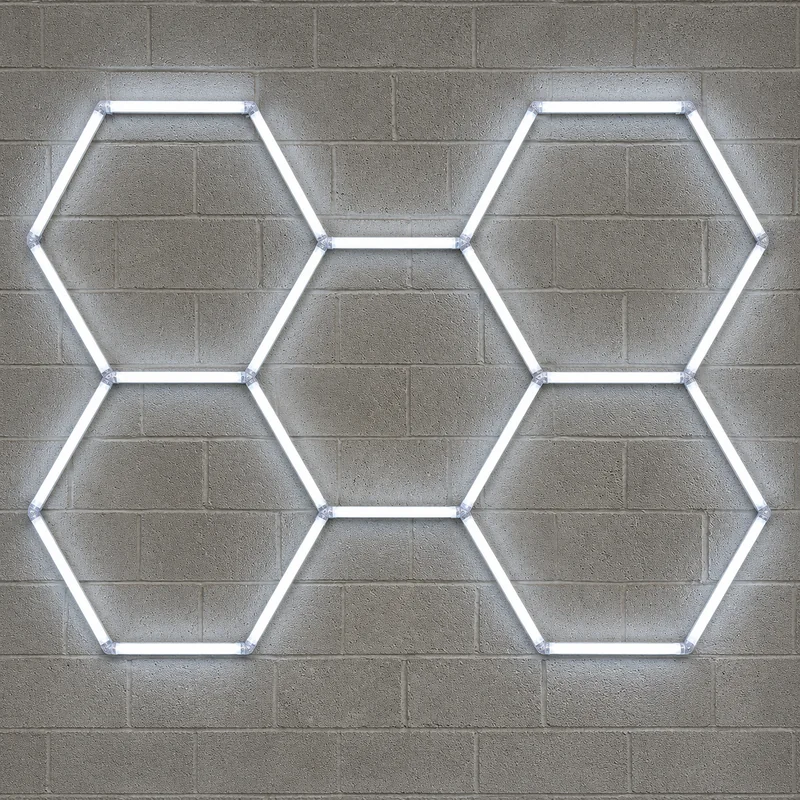
A quotation for a garage lighting kit usually lists the tube length, power, connectors, and carton quantity. Those details help compare offers, but they leave some practical questions unanswered.
Will the kit suit the customer’s ceiling? Is it suitable for a hot workshop or a humid detailing bay? If one section stops working, can the customer replace it without returning the whole set?
For wholesalers and project buyers, these questions affect the cost of selling and supporting the product. A lower purchase price leaves less room for profit if every installation needs extra parts or every service request takes weeks to resolve.
A five-hexagon kit is a useful example of what to check before placing a bulk order.
Start with the bay, not the lighting pattern
A detailing studio, a repair workshop, and a car wash may request a similar ceiling layout. Their working conditions can be quite different.
In a detailing studio, buyers need to consider where the vehicle sits and how technicians inspect the bodywork. The ceiling pattern is only part of the lighting plan. Depending on the work being done, additional lighting may be needed around the sides of the vehicle.
In a repair workshop, the main concern may be clearance around lifting equipment, door tracks, and overhead services. A layout that fits the floor plan can still interfere with equipment above it.
A car wash introduces another question: exposure to moisture and cleaning spray. Suitability for a garage does not automatically mean suitability for a wash bay. Confirm the selected model’s protection rating and permitted installation location before offering it for that application.
The same applies to local climate. For hot markets, ask for the rated operating temperature and consider conditions near the roof. In humid or coastal locations, check the suitability of the connectors, mounting hardware, and electrical connections. These details should come from the model documentation.
Check what the installer will actually receive
Missing or mismatched accessories can delay a job even when the lights themselves are in good condition.
The illustrated five-hexagon kit contains 24 light tubes, one power cable, 11 V connectors, nine Y connectors, and 30 zip ties. Buyers should receive a packing list that matches the configuration they ordered.
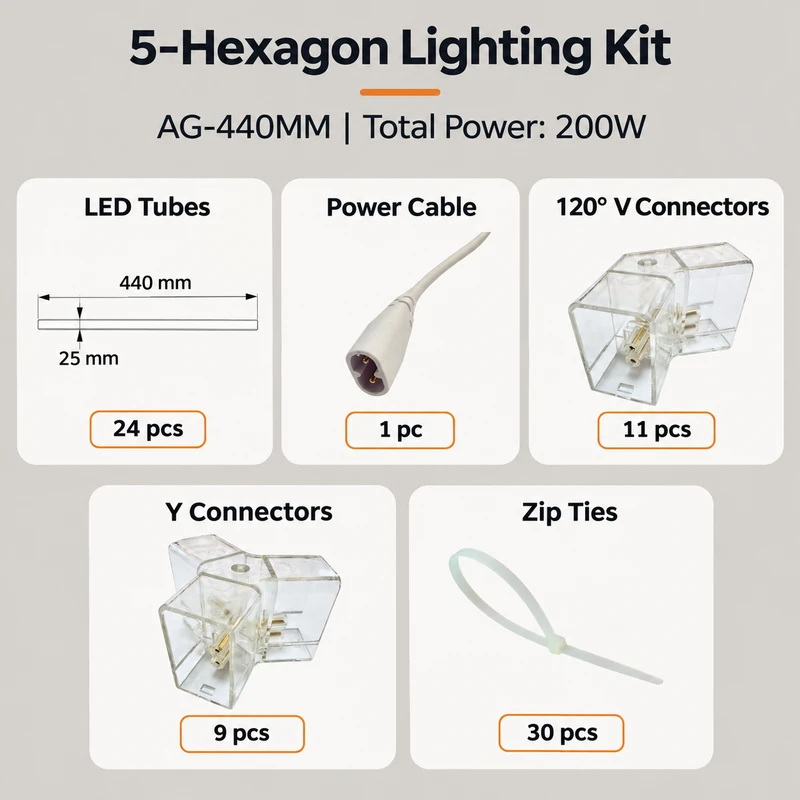
For a distributor, a clear packing list also helps warehouse staff answer customer questions. They can identify a missing connector without opening another complete kit or sending photographs back and forth to the factory.
Check the less visible details too: the power cable connection, the mounting accessories, and which parts must be sourced locally. The illustrated list includes zip ties; screws and ceiling anchors should be confirmed separately.
A sample should answer questions about durability
A product photograph cannot tell a buyer how consistently the connectors fit or how well the components will arrive after transport.
Use a sample order to check the tube housings, connector fit, mounting points, and packaging. Look for parts that seat correctly without excessive force. Confirm that the instructions match what is inside the carton.
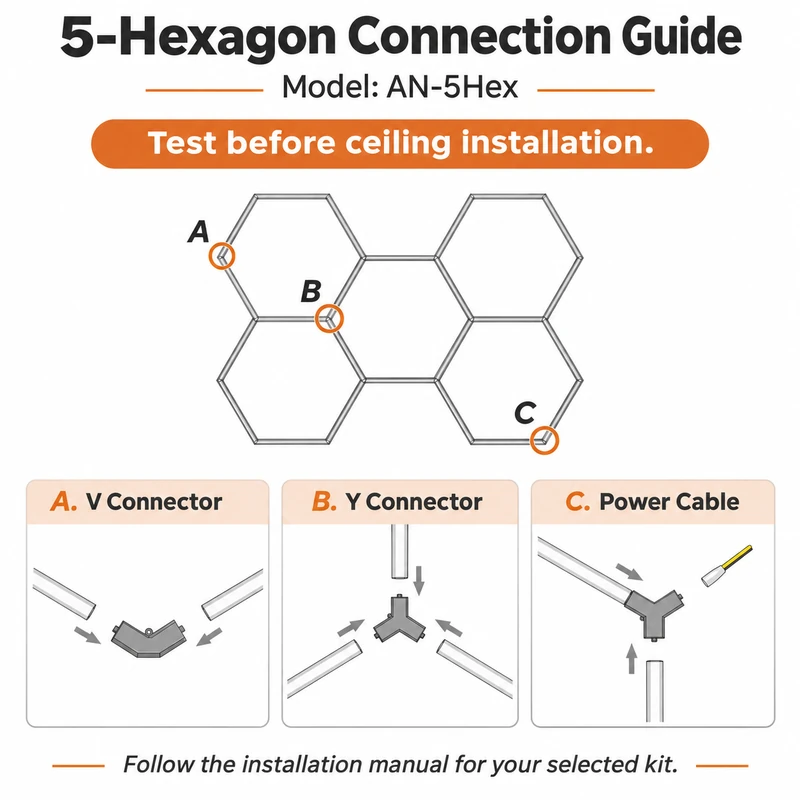
Ask what the factory checks before shipment and how a reported fault is handled. A useful answer describes the inspection process and the information needed to investigate a problem.
Claims such as “zero failure” offer little help with a purchasing decision. Recorded faults, clear troubleshooting instructions, and an agreed replacement process are more useful when assessing a supplier.
Confirm the mounting method before quoting the project
The installation illustration shows two approaches: ties on a suitable ceiling grid and screws on a flat ceiling.
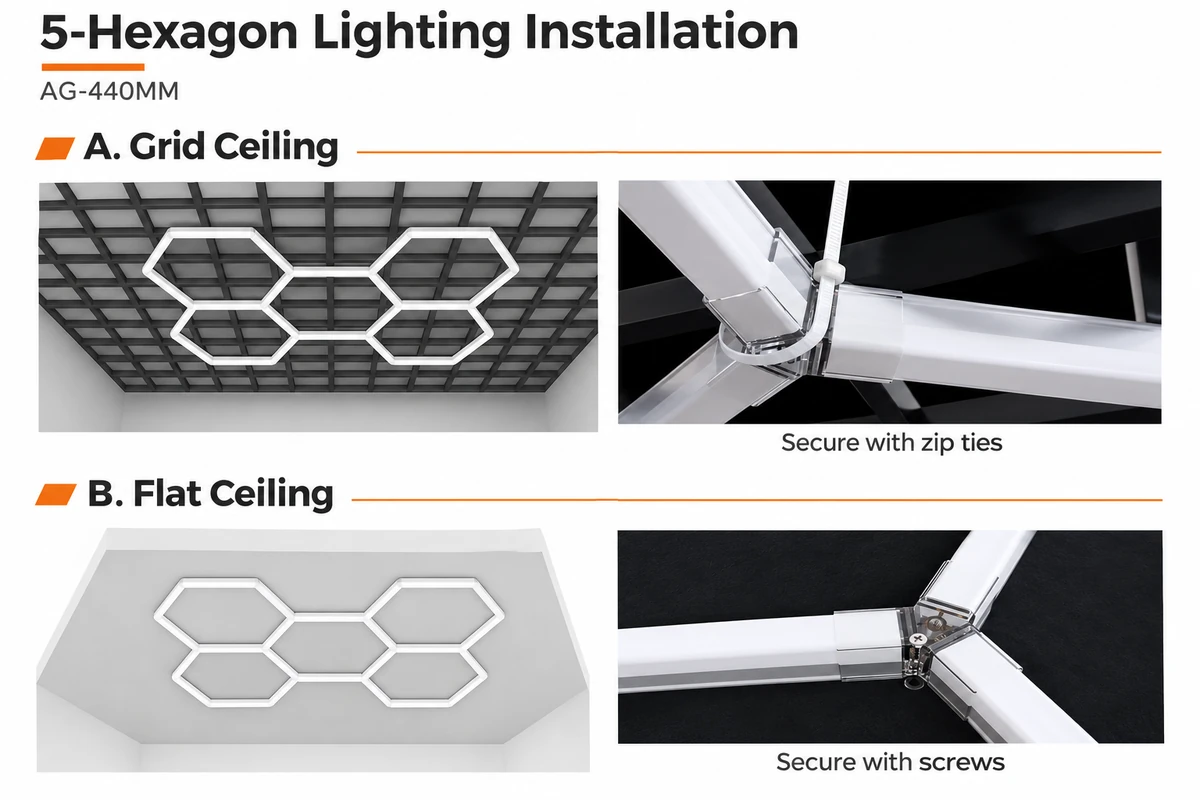
These options should be discussed before the order is finalized. A contractor needs to know whether the existing structure can support the system and which fixings are required.
For repeat projects, keeping the mounting arrangement consistent can make quoting and preparation easier. Where ceiling conditions differ between sites, agree on the necessary accessories for each location.
Compare electricity use against the lighting required
Commercial garages may keep their lights on throughout the working day, so running costs deserve attention.
Compare the proposed system’s total power with the existing installation, then check whether it provides the lighting the work requires. A lower-wattage layout offers little benefit if the customer has to add more fixtures afterward.
Avoid quoting a fixed energy-saving percentage without a defined comparison. For purchasing purposes, the useful figures are the installed power, expected operating hours, and local electricity cost.
Make after-sales support part of the order
Modular construction can make servicing more practical, provided compatible replacement parts remain available.
Before buying in volume, agree on:
- How to identify replacement tubes and connectors
- Which spare parts to hold locally
- What information is needed for a warranty claim
- Whether future batches will remain compatible
Keeping a small stock of agreed service parts may help a wholesaler resolve a customer’s problem sooner. It also reduces the need to take components from a new kit.
Compatibility needs particular attention when the supplier changes a connector, tube, or electrical design. Ask to be told about changes before the next shipment.
Build repeat orders around a clear specification
Factory-direct sourcing is most useful when it makes communication simpler. The buyer should be able to confirm a layout, identify a service part, and reorder the same specification without starting again.
For regular stock, keep an agreed record of the components, packaging, instructions, and labeling. Introduce customization where it helps the local market—for example, a preferred layout, branded cartons, or instructions in the customer’s language.
BONTOP Lighting supplies LUXBONTOP modular hexagon lighting systems for wholesale and project orders. Buyers can share their bay dimensions, ceiling photographs, destination market, and quantity to discuss the configuration, supply requirements, and service parts before ordering.
For project and wholesale enquiries: [email protected] www.bontoplight.com