From Sample to Mass Production: How Custom Honeycomb Orders Work
Published 2026-09-19
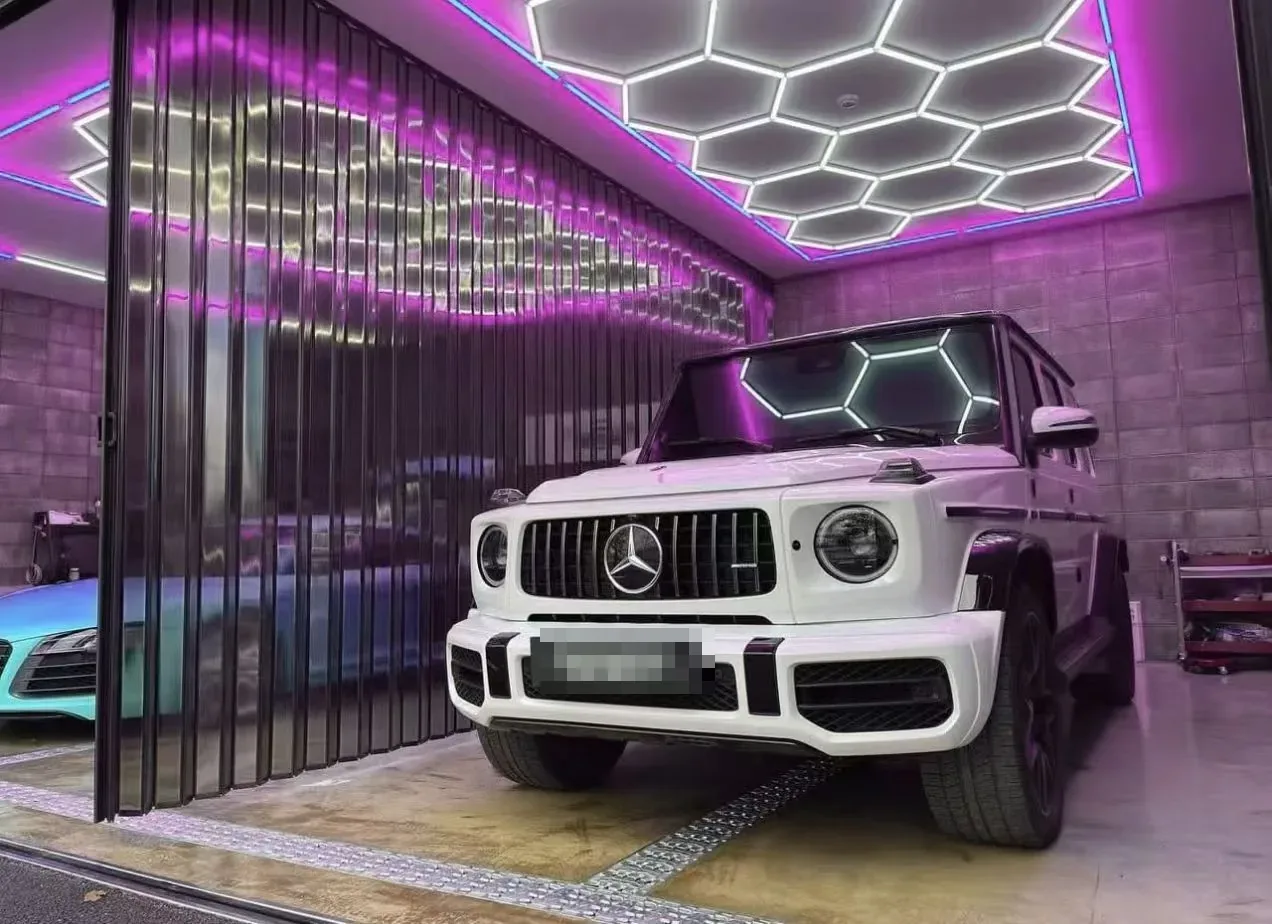
Most buyers who approach a manufacturer for a custom honeycomb layout want to know what happens after the dimensions are sent. This page sets out the sequence from layout review through sampling and production preparation.
Step one: dimension and layout review
The first stage is not a quote, it is a fit check. We take the ceiling dimensions and compare them against the configurations in the range, which is what decides whether the space is served by a standard grid or needs a special shape.
Review works from a short list of project inputs. The more of these are present, the fewer clarification rounds are needed:
- Clear ceiling length and width, not the room dimension
- Ceiling height, measured from floor to mounting surface
- Where the vehicle or vehicles normally stand
- The number of bays or complete layouts required
- Destination market, which settles the supply question early
- Whether the ceiling is a working surface or a design feature
At this stage the layout is reviewed as a drawing. For custom shapes we work from a CAD drawing or a 3D rendering so the outside dimension, tube direction and connector positions are agreed on paper before anything is cut. A marked-up ceiling photograph is often the fastest way to start, because it shows the beams, doors and services that a plan drawing tends to leave out.
Step two: sampling
If a sample is agreed for the selected product and configuration, it can be used to evaluate the finish, connector fit and light quality before committing to a production quantity. Availability and schedule are confirmed for the specific project.
Where a large custom grid is being considered, send the ceiling size before ordering the sample. A sample built against the wrong dimensions is a sample of the wrong product, and the components will not match the eventual layout.
Step three: mass production
Mass production preparation begins after the relevant specification, quantity and order details are confirmed.
| Stage | Decision point | What is settled here |
|---|---|---|
| Layout review | Before quotation | Dimensions, configuration, supply voltage |
| Sample | After specification confirmation | Finish, connector fit, light output |
| Mass production | After order confirmation | Approved specification and quantity |
Customisation available on an order
Beyond the layout itself, the product family, supported voltage option, white or RGB lighting and modular shape are selected for the project. OEM/ODM requirements can be reviewed for distributor orders.
The honest position on scope is that final options depend on the specific product and project. We confirm what is possible against the configuration being quoted rather than offering a blanket list, because a modification that is straightforward on one system can be impractical on another.
Order confirmation
The production minimum order quantity is 10 pieces. Custom shapes and OEM/ODM requirements are confirmed against the configuration being quoted.
What is the minimum order quantity?
The production MOQ is 10 pieces. Custom shapes and other project requirements are confirmed against the specific configuration during quotation.
Can OEM/ODM requirements be reviewed?
Yes. OEM/ODM requirements are reviewed against the selected product, configuration and order quantity during quotation.
Do you provide drawings before production?
Custom shapes are reviewed from a CAD drawing or 3D rendering so the outside dimension, tube direction and connector positions are agreed before production. That drawing is also what the production and inspection stages are checked against.
If you have a project in progress, send the ceiling dimensions and the destination market through the request form and we will come back with the layout and the applicable specification.